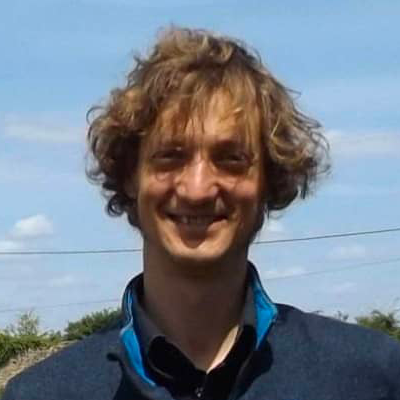
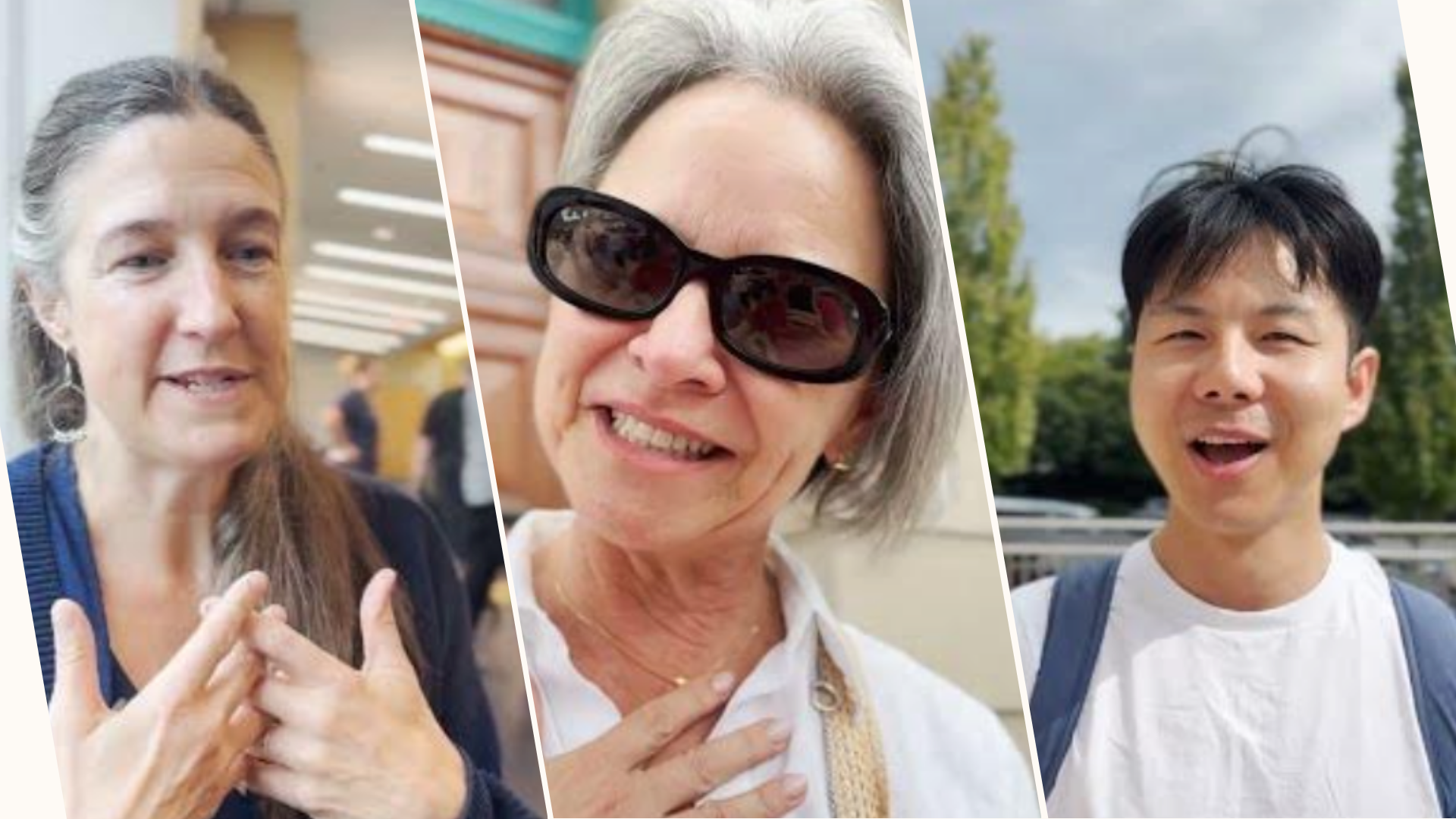
This is a dialogue between Paola (WCCM Marketing) and Thomas Litzler, French meditator and responsible for the permaculture project at Bonnevaux, Centre for Peace, France.
Thomas, the theme for 2026 is ‘The Future of Religion’. Can you share any thoughts about this theme? How do you see this theme?
Thomas: I don’t come from a Christian family myself so religion – as an institution as I can see it at church in the French landscape – always felt a little bit strange and outdated. And I actually had to go through the experience of faith by meeting other people and having conversation with them.
And I had in myself this spiritual calling, a calling for spiritual meaning. And, behind the spiritual meaning was my wish to be at peace, to live in a harmonious environment with people, who I can relate with, who I can talk to. And I have this need of being surrounded by love, basically.
That’s led me to meet people, to discuss these questions with them, to get to explore, to follow what kind of a pilgrimage it has developed over time in different stages.
And, from this, I understood the support that community can bring to answer my spiritual calling. And with them, I had been I have been ever able to go into the official of religion, like going into the Gospels, going at mass, having the liturgy, bread and wine. And, I was able to find meaning in all of this because originally I have this longing for love and peace.
And with the help of the community, I was able to understand the meaning. Why were you doing all this liturgy? Why we are repeating these same words. And, this is, I think, how religion can evolve in a world that is changing a lot and, people are getting very suspicious about religion for good reasons.
I think the way of reconciliation with religion is to go back to the center, to the core for being, to remember that we long for love, that is the purpose of religion, what is really important. Everything else is just a shape that we’ve built around it. And the shape can only be understood if we start from love.
At some point, I was able to understand that what we call God is actually a synonym for love and love is a synonym for God and it’s the starting point of everything of the whole universe. Life has evolved over centuries through this energy of love.
So the future of religion, I think, is not so much in the institution, even not in the liturgy, the wording, even the Gospels. It will only really make sense if we come back to what is at the heart of every single person. Like this calling I was able to listen to. So the most important thing to me is to find space where we can actually sit still in silence, to be able to be in touch with this very precious part of our being, that we all have, but modern society doesn’t provide us any space to connect with this center. So that’s a matter of will to have this strong will to take time aside of the modern life, daily life, to connect with the heart and to then be able to relate with religion, with community.

How do you think contemplative communities like ours can help shape this future, particularly in respect to a ‘religious experience’?
Thomas: When we are told something from a religious institution, we have a critical mind which is perfectly healthy and we question it, we say, but the priest said such and such, but I don’t agree with it or with him or I don’t understand why he’s saying that.
So this is when I think it’s important to come back to your own spiritual center, to withdraw, to go in silence and peace, and to let it evolve and to discern after meditation, to discern if what we heard resonates in a way with love, or if it doesn’t. And it may be something we’ve been told that it seems to be very bright, very intelligent but we don’t find any any echo in ourselves with our need for peace or need for love. Or from this time of reflection, something will arise, maybe it’s not quite related with what we heard, but, something else will arise and resonate with your own life experience, and we will be able to build some kind of wisdom from what we heard.
So I think in religion, it’s very important to understand that we’re the main person in charge, we cannot delegate our spiritual growth. We cannot ask someone else to do it for us. It’s not like a class teacher who is teaching us mathematics or history. When we are told something, this first step is of no importance, if we don’t make something out of it and making something out of it is being able to build it in your own life from our center. And usually that means being able to share it somehow with other people.
Because our goal I would say to have people around us so we can receive in return but this is a very important step of this is really what religion leads us to. But we have to filter everything that we have told, in order to see how it can support this important step of serving others.