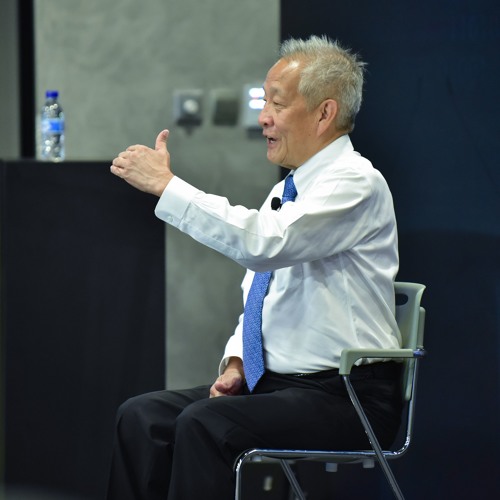
This is a transcript by Peter Ng, from an annual gathering of Singtel’s senior executives from around the world led by CEO Ms Chua Sock Koong, the event was held in September 2019. Peter is a member of the WCCM Executive Committee and National Coordinator for WCCM Singapore. He is Chairman and Founding Partner of Singapore-based Avanda Investment Management.Singtel is a Singaporean telecommunications company.
Â
I want to come and share with you this morning how meditation has helped me in my work, in my life since I started practicing it more than 30 years ago. I feel that the practice of meditation is like an upgrade of your personal software because it will transform you, it will help you to live your life more meaningfully more joyfully. I teach meditation, in the business schools because I feel that the one dimension of management which is badly neglected in our business schools and executive coaching is self-management.
How do we manage ourselves? How do we manage our lives? And the key to a sustainable career in management and the key to good leadership is self-management. Meditation is important because it is something that if you can practice with discipline will help you to come to self-awareness, self-knowledge, it will affect your life.
And it will manifest in your work. […] The good thing about the practice of meditation is that it is the way of experience. You don’t have to take anyone’s word for it. You find out from your own experience, from your own practice of it, how it affects you. It is a demanding discipline, it is demanding, first of all because people say, I like to meditate, but I have no time. So you need to find out from your own experience that the time that you dedicate to meditation in the morning and in the evening is not a loss of time.
By meditating you are gaining time because the quality of your life, the quality of your work is going to be greatly enhanced.Â
Â
5 Ways meditation can transform your life
So let me propose to you 5 ways you might say in which meditation can transform your life. I said at the very beginning that meditation is doing the work of attention.Â
Now attention is perhaps the most important quality for any human being to develop because first of all, attention is necessary. For study, imagine if all the children in Singapore were to learn to meditate. What a tremendous change it will make to the power of attention in the classroom. Especially in a world full of distractions, there was a reason why when I was talking about meditation with Mr. Lee Kuan Yew, he came up with this idea that it will be good to introduce it to the schools.Â
Secondly, attention is important for work. Whatever you are doing, if you learn to pay attention to the work at hand, the task is likely to be completed more efficiently and you probably do not have to go and revisit the work to redo it because of the attention that you pay to your work.Â
Thirdly, attention is most vital. For relationships learning to pay attention to someone is vital. Whether it’s a relationship with your spouse, with your children, with your colleagues at work, with your friends, with your clients. Because when we can learn to pay attention to someone without being distracted, we are showing respect, we are honoring the person that we are with. So we are not sort of what the person is talking, composing another question in your head to ask them, you give your attention to that person at the highest level, you can say that is love.
To love another person is to give them your undivided attention. So it’s vital for relationships. And the fourth way that meditation can help you, I talk about self-management is that it helps you to harmonize yourself. So when we go to work, there are bound to be problems in the office, challenges. Where we get unsettled, we get angry, we get agitated, we get troubled. In other words, quite often during the day, we are thrown off center, we become unbalanced, our emotions take over. But when you learn to sit still and to bring your mind to stillness then your whole person comes into a harmony. The harmony of body, mind and spirit.Â
And this is particularly important if you can meditate in the evening. Because after a day’s work, you need to re-enter yourselves before you go back to your family.
Otherwise, if you carry all the problems of work back home. You cannot spend quality time with your loved ones. So it’s good at the end of the day to sit down, to still yourself, to calm yourself down, to re-enter yourself. In other words, every human being has a center of peace, of harmony. It is to be found inside of us. We must learn to go there, to come back to harmony, to restore ourselves and that is how over time meditation helps you to de-stress, helps you to be more relaxed. So that’s the 4th dimension. Because sometimes you say how the sitting still and saying this word. How does that transform me? It seems quite far-fetched, isn’t it? To say that something so simple as this can be so transformative. Well, I found that out over the last 30 years that I’ve been meditating that it does help me in those few dimensions.
The 5th point is the most important: I said that meditation is about learning, to pay attention to cultivate the quality of attention to develop the muscle of attention. But the attention that we are learning in meditation is a very special kind of attention, I would call it selfless attention. There’s a huge difference between paying attention to yourself and selfless attention. Meditation practice in a spiritual sense is not focusing on yourself, but focusing the attention on the other. The other, you might say during the time of meditation is God. So selfless attention is very critical because if you practice meditation, with what I call a narcissistic motivation ‘I want to meditate because I want to have clarity of mind, I want to be more relaxed so that I can get a promotion, I can make more money’ well that’s a self-centered narcissistic motivation. But in order to go deeper, to really come to experience the meaning of what it is to be human, we have to learn to take the attention of ourselves. So in meditation when you sit down and you say the mantra, what are you doing? You are letting go of your thoughts, of your ideas, of your plans, of your desires, of your problems. They will all be challenging you during the time of meditation and you just say ‘not now, I am meditating’. So you go back to saying the mantra. It is what we call leaving the self behind, leaving yourself with occupation behind. Taking the attention of yourselves and cultivating selfless attention. So if you practice meditation in this way, then you are going into what I would call the spiritual dimension of meditation I didn’t say religious, I said spiritual. Spiritual in the sense that it takes you to a deeper part within yourselves, where you even begin to ask the question : who am I?
Who am I? That is a deeply spiritual question that will lead you to an experience that you are important, you are unique. But that you at the deepest level of your being can be in harmony with others, indeed can be in harmony with the whole of creation, that is a deeply spiritual experience. And that has got very important implications for leadership. If you can sustain this practice long enough and come to this experience you begin to see leadership, not as an exercise of power which is about yourself – I will use this power to get what I want. But you will come to an other centered experience where you see leadership as an acceptance of responsibility. I’m a leader, I have a responsibility to the people that I work with, to my colleagues, to my clients. So it’s no longer me, I but we. Meditation is a good way, not the only way to cultivate this quality of ‘other-centeredness’.
In other words, the longer you meditate, the more you come to this experience. They said, I’m a leader, I am important, all of you here, you are leaders in your company, you wouldn’t be here unless you are important to the company, important in the sense that whatever you do has got an impact, you might say on the bottom line. You’re important but the danger is that you become self-important. So this is the way of saying to you that meditation over time helps you to develop a healthy ego. We need an ego if we don’t have an ego, you wouldn’t be here. Because the ego is what gives us a drive to do things, not only to desire something but to get it done. And that is a gift to have the ego. But the ego can get inflamed and after a while you become a dictator.
Now we can see that in the United States, it’s an eagle which has gone wild. On the other hand, the ego can become healthy. So meditation is a way of developing a healthy ego, and that is I think very important for leadership.